Describing the Dao
Unlike the way in which we can observe, identify and understand things with a cognitive logic, the Dao is not simple to describe in this way and cannot be approached with this type of linear thinking. Chuang Zi explains:
‘Great Dao is beyond description’
Chapter 14 of the Dao De Jing helps us to understand just how elusive the Dao is:
‘Look, it cannot be seen – it is beyond form.
Listen, it cannot be heard – it is beyond sound.
Grasp, it cannot be held – it is intangible.’
Even providing the label ‘Dao’ presents it’s own problems when it comes to understanding what the Dao is or isn’t. Lao Zi knew that trying to describe or ‘name’ the Dao only serves to reinforce our love of defining and labelling:
‘The Dao that can be told is not the eternal Dao.
The name that can be named is not the eternal name.’
However, Lao Zi understood that people needed at least some way to refer to what he was talking about, so he gave them a ‘way in’:
‘I do not know its name
Call it Dao.’
Whilst there is a great wisdom contained in the classical texts, there are also subtle, light-hearted moments. Here, Lao Zi reminds us of just how many labels we already have in our world!
‘Once the whole is divided, the parts need names
There are already enough names’
Nobody special to be and nothing special to have
The Dao is not a religion, a philosophy or a particular method or cultivation, but it can be all of those things. It is not definable in those ways. The Dao came before the development of organised institutions that created more structures in our society.
Because there are no structures in Daoism, the Daoist view can sometimes appear contradictory and the paradox of the teachings is that the view is not based on obtaining or attaining an ideal (such as mastery or enlightenment for example). In fact paradox is part of the teachings.
It is not about adopting a way of being or becoming something special. Cultivation is not a system of self improvement based on a regime, in this way, there are is no progress to be assessed and no judgements to be made. In Daoism there are no ideals and nothing that needs to be imposed on our natural state.
This aspect of the teaching is given in the Dao De Jing, where Lao Zi explains the Dao is not about striving to obtain something:
‘In the pursuit of learning, every day something is acquired
In the pursuit of Dao, every day something is dropped.
Less and less is done
Until non-action is achieved.
When nothing is done, nothing is left undone.’
He also hints at our tendency to want to collect skills, methods, or knowledge to hold on to:
‘Therefore the sage seeks freedom from desire.
He does not collect precious things.
He learns not to hold on to ideas.’
Without definition
Our path is a natural unfolding that has many experiences along the way. Experiences arise all the time for us, but because we do not define these experiences and give them a label (for example ‘this is an experience of enlightenment), we can let go of ideas about the practice having a particular purpose or orientation towards a goal. However, we also do not ignore or deny these experiences as they are part of our process.
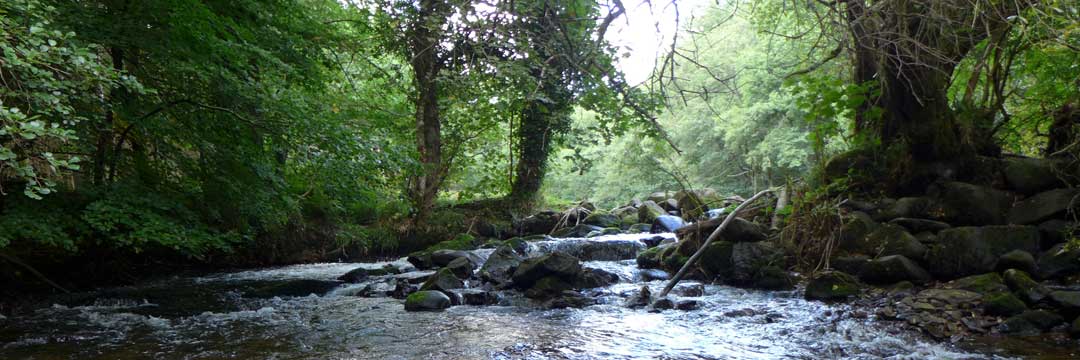
To describe this, the image of water is used as an elegant metaphor. Water is transparent, it can take on a colour, but it is not defined by that colour – it takes on the shape of the vessel it fills, yet it is not defined by the shape of that vessel and it flows along the path of least resistance. This is the inherent nature of water and it is used as a way to describe the path of a Daoist practitioner.
Often we find ourselves looking for definition in our lives in some way. For example: ‘I’m a Daoist’, ‘I’m a doctor’, ‘I’m a mother’ or ‘I’m a plumber’. The image of water that represents the Dao, means that it is not definable, because it’s transparent it can take any colour, or shape but of course it has neither colour nor shape – it is free from those definitions.
This is a major teaching of Lao Zi in the Dao De Jing that many people often do not see and is a key teaching that expresses our way of cultivation. It may not seem obvious at first, but we as humans are like this. This is why we cannot be defined in any way and certainly not in a way that out minds can grasp.
Like the metaphor, our original nature is like water and this is how we view the Dao – the way in which things follow and express their original nature. Lao Zi says:
‘Man follows Earth.
Earth follows Heaven.
Heaven follows the Dao.
Dao follows what is natural.’
It is true to say, that the Daoist view can be a hard teaching for some people as they are look to be defined by it. It is like wanting to have a clear, signposted path that tells us how many miles we’ve got to go before we arrive. It can be difficult for some people to accept that there are no promises, no rewards and no pact to make with the Dao, in order that; ’If I do this, will I get that?’
For some, it may seem like there is nothing of value in following this view. Lao Zi says:
‘… a description of the Dao
Seems without substance or flavour.’
He also expresses how at first, there may appear to be nothing of value in the Dao:
‘The bright path seems dim.’
The Permeating View
In essence, the Daoist view respects and honours the natural expression of who we are – to what is constant. To be with what is constant is to illuminate and become intimate with our true nature where we are free from conceptual forms.
It is this view, of being open to receive what arises in the present without separation, that permeates every aspect of the cultivation. It is only when the correct view and method come together, that our true nature can sparkle through. In this way, we can experience a return to our natural condition of wholeness, where nothing has been added or taken away. This is expressed by Lieh Zi who describes letting go of striving for some achievement and introduces the metaphor of being like a mirror:
‘Do not be an embodier of fame; do not be a storehouse of schemes; do not be an undertaker of projects; do not be a proprietor of wisdom.
Embody to the fullest what has no end and wander where there is no trail. Hold on to all that you have received from Heaven but do not think you have gotten anything. Be empty, that is all.
The Perfect Man uses his mind like a mirror – going after nothing, welcoming nothing, responding but not storing.’
Nothing is seen to be outside of cultivation, what arises is always included and complete trust in the process is central to the cultivation. Trust and acceptance in the way the 10,000 things arise for us (a term used to describe all things) is part of the view. This can be likened to the central aspect of compassion in the Buddhist traditions. If the view is held, it goes through everything.
The Daoist view can be found in all of the seminal Daoist classics, it is there at the very root of the constitution of the Association, through to all the events that are organised throughout the year and forms the very heart of the teaching – regardless of whether it is a one-day event or week-long retreat.
For further information about the Daoist View in relation to the cultivation, please see the ‘Core Cultivation’ section.
Learning about the Dao
Whilst having an experienced teacher is important to guide and support us in becoming more intimate with the Dao, Daoism cannot be taught, although the teaching can be shared and realised through the practice. In this way, it can be ‘learnt’.
This can seem confusing and contradictory and is one of the paradoxes of Daoism – how can we learn something which cannot be taught? Surely if it can be learnt, a method can be devised in order to teach it!
It is true that there are, what might be called ‘methods’ in the Daoist cultivation. However, these are not methods designed to bring about an effect or experience, rather, these are aspects of the practice that help us to orientate towards the entrance – to a ‘way in’ to the cultivation. This is also, where we consider the environment that the teachings are received in and why we view the retreats as an opportunity for people to experience just how the environment influences the cultivation.
Learning through letting go
If we are able to let go of our ideas about things and are open to receive the teachings, they can be received in a formless, unconditional way and we can be open to receive things in the present without separation from them – to receive what arises without separation
This aspect of letting go of what is held and opening what is closed is another core aspect of the teachings. Learning then, becomes the embodied experience that is realised through the practice itself and only if the ‘view’ is also present. Without the view, there is no potency to the method.
Inclusivity
There are no pre-requisites to learning. Learning is not based on age, gender, social status, intellect or previous meditation experience. The Dao is all inclusive, nothing is excluded. All that is required is a willingness to be open to what is arising.
Cultural conditioning and cultural aspects do not play a part in Daoism. Even though people tend to like their cultural flavourings, there is nothing wrong in them, they are equally being played out everywhere in different ways.
In the Chuang Zi, we find teachings that come through the mouths of the carpenter, the wheelwright, the fisherman, the tea seller, the weaver, the potter and so on. He elegantly makes the point, that one’s capacity to be present with the Dao, is not defined by culture, social status or what job one has.
For further information about the practices and events organised by the Association, please see the ‘Cultivation’ and ‘Retreats’ sections. For details about the core texts please see the ‘Reading List’ section.